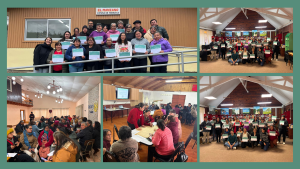
As part of the Connected Communities project, the three courses of the âDigital Transformation for Family Farmingâ Training Program concluded...
A new Rimisp report explores the evolution of public policies aimed at smallholder family farming in Chile, identifying the various government approaches and their effects on rural areas.
Rimisp Library Working Paper No. 316, titled âFrom Entrepreneurs to Stewards: Development Policies for Family Farming in Chile (1990â2023)â and authored by MarĂa Paz Sagredo A., analyzes how government policy toward small-scale agricultural producers has fluctuated over time. The study shows that the institutional framework has operated based on three main approaches:
The Value of Local Governance Versus “Imported Models”
Using the Coquimbo Region as a case study, the research details how the coexistence of various government programs and approaches creates a fragmented institutional framework that imposes administrative barriers on small farmers. It also warns of the gap between âone-size-fits-all modelsâ designed at the central level and local realities, which prove inadequate for addressing extreme vulnerability and challenges such as drought. Despite this, it highlights that small farmersâ participation in the Regional Rural Development Council has helped articulate demands and create relevant toolsâprovided they are not ultimately standardized by the central government. Thus, the author concludes that the greatest national challenge is to structure a programmatic framework with responses tailored to specific production profiles and territorial contexts to address the needs of family farming.
This document is based on the doctoral dissertation titled “Living and Surviving in the Countryside: The State and Peasant Organizations in Coquimbo, Chile, 1990â2023.” The research was conducted using a qualitative and ethnographic approach that included in-depth interviews, participant observation, and a review of public policy documents and press coverage.
The working paper is available here: From Entrepreneurs to Stewards: Development Policies for Family Farming in Chile (1990â2023)
As part of the Connected Communities project, the three courses of the âDigital Transformation for Family Farmingâ Training Program concluded...
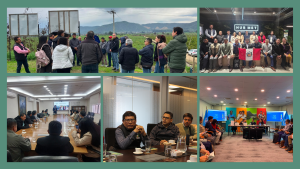
An intense week of work included meetings and workshops with local stakeholders to review and complement a preliminary ten-year investment...
Rimisp researchers Carolina Olcay and Natalia Slachevsky prepared the presentation comparing case studies in Chile, Ecuador and Peru.