From Entrepreneurs to Stewards: Development Policies for Family Farming in Chile

20/07/2026

A new Rimisp report explores the evolution of public policies aimed at smallholder family farming in Chile, identifying the various government approaches and their effects on rural areas.

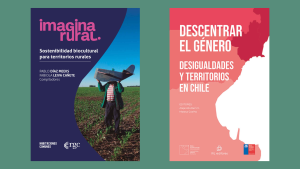
Rimisp Library Working Paper No. 316, titled “From Entrepreneurs to Stewards: Development Policies for Family Farming in Chile (1990–2023)” and authored by María Paz Sagredo A., analyzes how government policy toward small-scale agricultural producers has fluctuated over time. The study shows that the institutional framework has operated based on three main approaches:

  • Farmers as Entrepreneurs: Since 1990, there have been initiatives aimed at modernizing agricultural production based on the assumption that farmers were capable of competing and entering international markets.
  • Farmers as a Vulnerable Population: Productive development programs were implemented for rural populations living in poverty who require specialized and targeted assistance.
  • Farmers as guardians: More recently, an alternative narrative has emerged that values small-scale family farming as a guarantor of environmental sustainability, food security, and food sovereignty.

The Value of Local Governance Versus “Imported Models”

Using the Coquimbo Region as a case study, the research details how the coexistence of various government programs and approaches creates a fragmented institutional framework that imposes administrative barriers on small farmers. It also warns of the gap between “one-size-fits-all models” designed at the central level and local realities, which prove inadequate for addressing extreme vulnerability and challenges such as drought. Despite this, it highlights that small farmers’ participation in the Regional Rural Development Council has helped articulate demands and create relevant tools—provided they are not ultimately standardized by the central government. Thus, the author concludes that the greatest national challenge is to structure a programmatic framework with responses tailored to specific production profiles and territorial contexts to address the needs of family farming.

This document is based on the doctoral dissertation titled “Living and Surviving in the Countryside: The State and Peasant Organizations in Coquimbo, Chile, 1990–2023.” The research was conducted using a qualitative and ethnographic approach that included in-depth interviews, participant observation, and a review of public policy documents and press coverage.

The working paper is available here: From Entrepreneurs to Stewards: Development Policies for Family Farming in Chile (1990–2023)

News

National News

Subscribe

Our offices: