
Inclusive Transformation of Horticultural Value Chains: Comparative Evidence from Africa and Asia
Autores
- INCATA Project
In Africa and South Asia, rapid urban growth and rising incomes have driven increased demand for horticultural products. Contrary to popular assumption, domestic production -rather than imports- is the main source to supply the vegetable’s increasing demand, positioning horticulture as a powerful engine of agricultural and food system transformation.
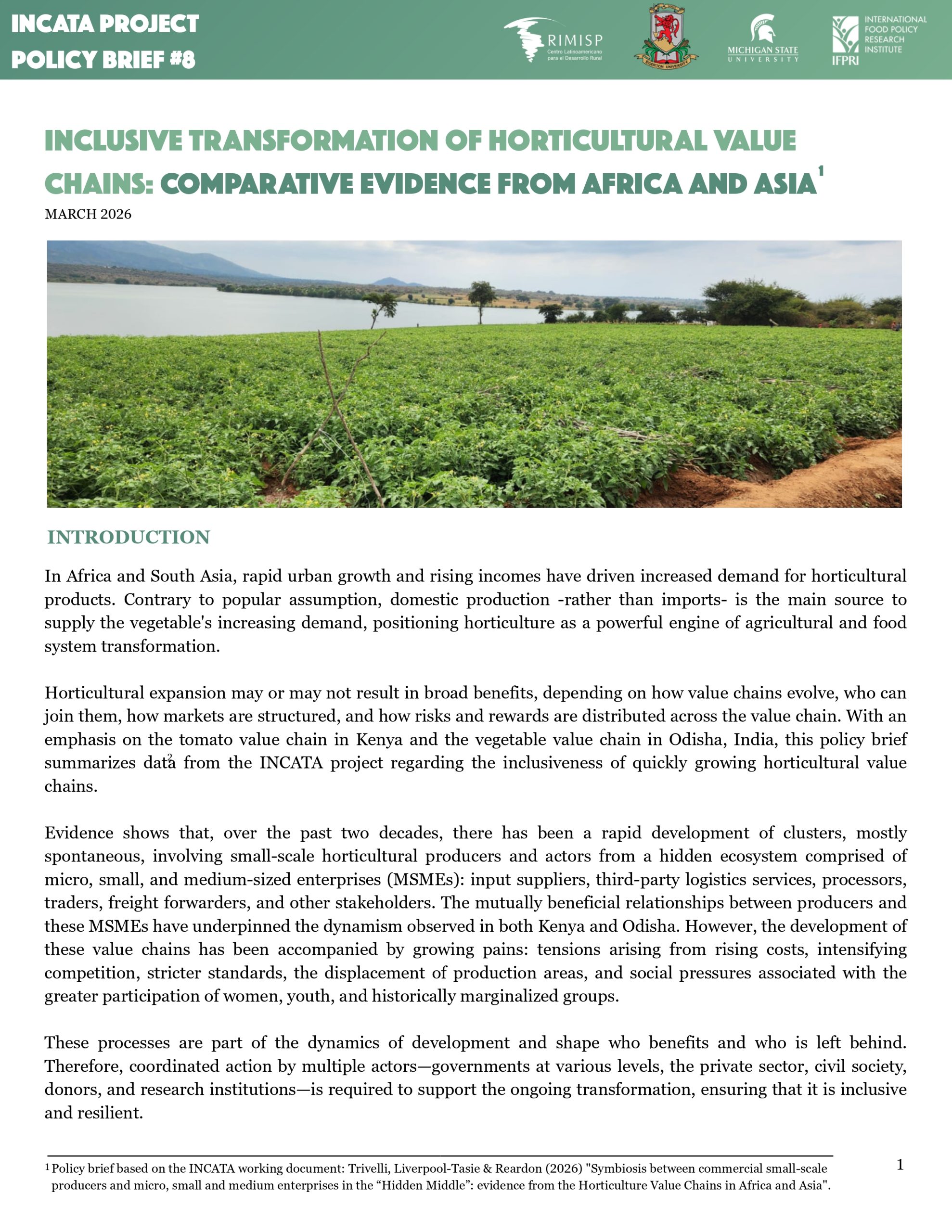
Horticultural expansion may or may not result in broad benefits, depending on how value chains evolve, who can join them, how markets are structured, and how risks and rewards are distributed across the value chain. With an emphasis on the tomato value chain in Kenya and the vegetable value chain in Odisha, India, this policy brief summarizes data from the INCATA project regarding the inclusiveness of quickly growing horticultural value chains.
Nuestras oficinas:

- Chile: Huelén 10. Providencia, Santiago, Región Metropolitana. (+56-2) 2236 4557 | Fax (+56-2) 2236 4558.

- Ecuador: Checoslovaquia E9-95 entre Suiza y Moscú. Edificio Eveliza Plaza. Planta Baja. Quito. (+593-2) 5150144.

- Colombia: Carrera 9 No 72-61 Oficina 303. Bogotá. (+57-1) 2073 850.