Colombian Rural Dialogue Group: Toward an economically, socially, and environmentally sustainable agribusiness sector.

02/07/2026

The fifth session of the Rural Dialogue Group (GDR) aimed to further the technical analysis geared toward an economically, socially, and environmentally sustainable agribusiness sector.

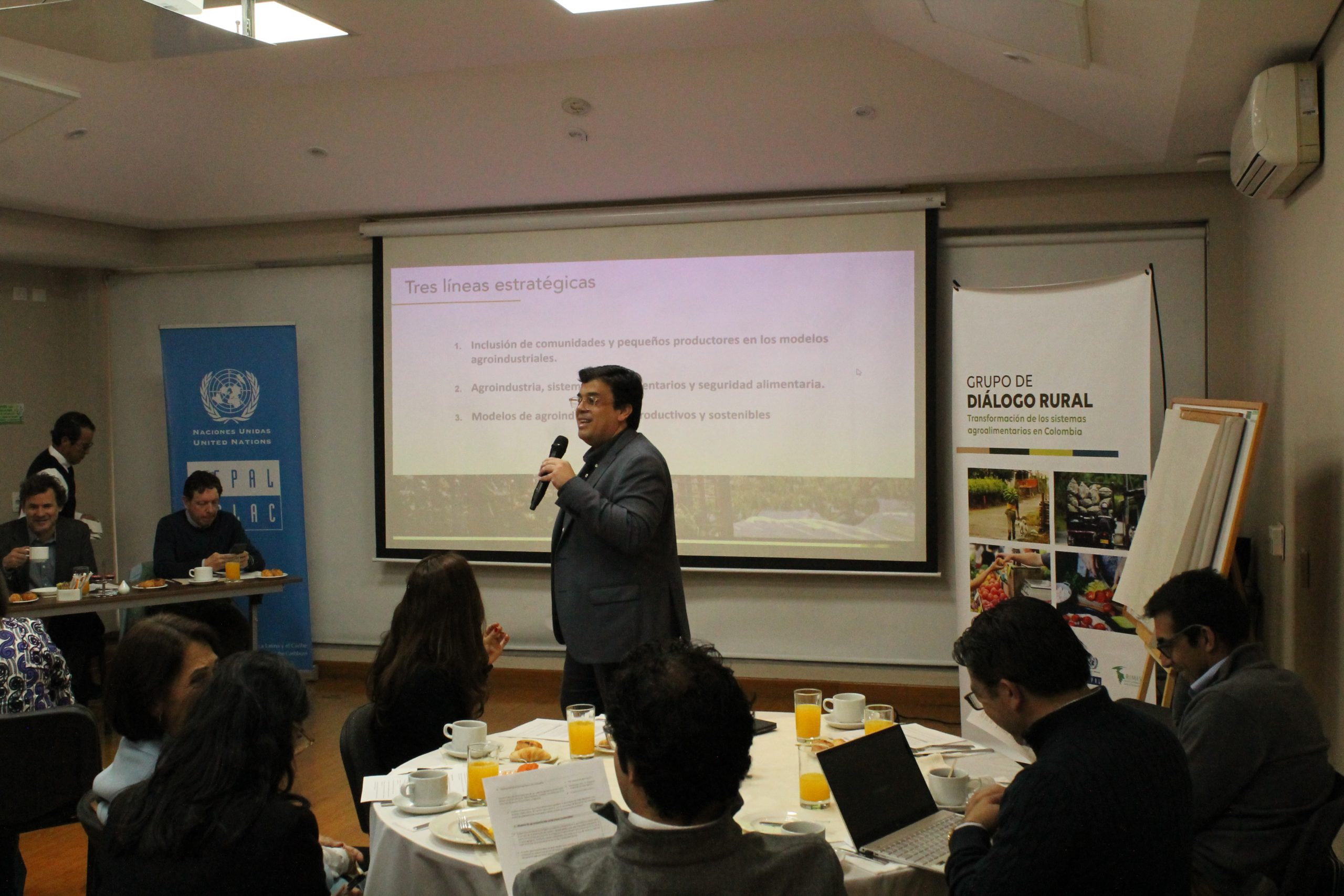
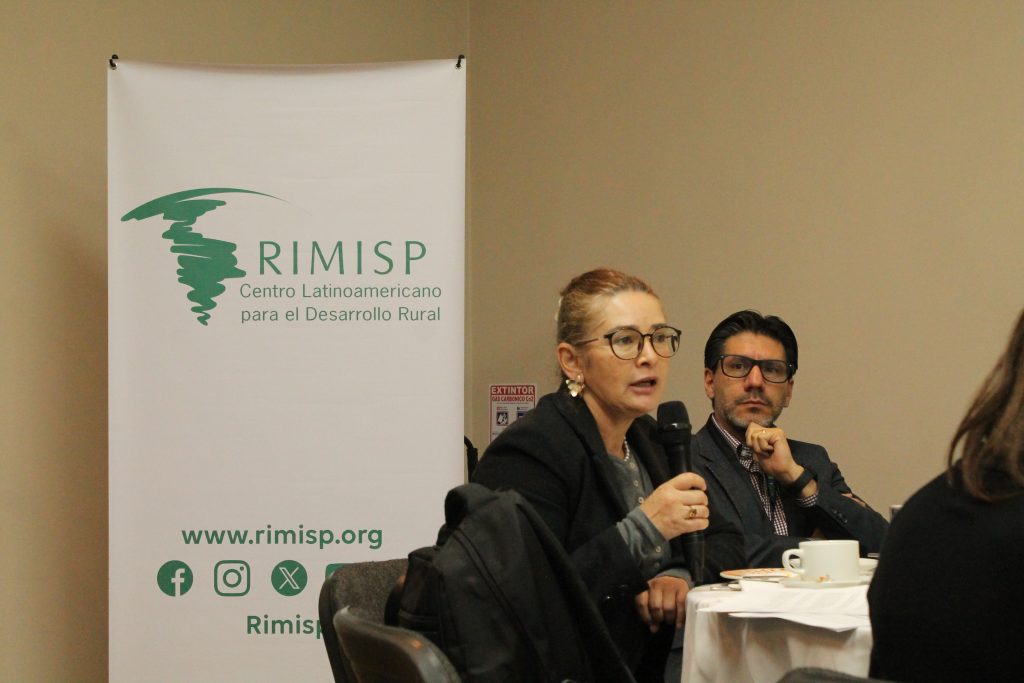
With the aim of analyzing the strategic guidelines for the agro-industrial sector in light of the National Development Plan, the following was held:The fifth session of the Rural Dialogue Group (GDR). This initiative, led by the FAO and ECLAC, with technical support from Rimisp, it serves as a multi-stakeholder technical platform focused on analyzing and formulating policy proposals for rural development in Colombia.

Furthermore, this meeting builds on a series of previous technical sessions in which the GDR has addressed issues such as productivity and land use, information for decision-making, the future of agribusiness, sustainability, and the inclusion of small-scale producers. On this occasion, the workshop was structured into two phases: the first focused on defining the group’s cross-cutting policy visions in light of the government’s context, while the second consisted of three technical working groups tasked with evaluating the inclusion of small-scale producers, food security, and models for productive restructuring.

Based on these discussions and the participants’ analysis, it was argued that the inclusion of communities and small-scale producers in agro-industrial models should not be limited to treating them as mere suppliers, but should instead be broad and comprehensive; to achieve this, it is necessary to overcome the false dichotomy between agro-industry and small-scale producers.

We must recognize the existence of small-scale agribusiness and ensure the productive inclusion of all types of units. Similarly, this inclusion must empower producers to participate in higher-value-added segments of the supply chain, supported by technical assistance and access to credit. For this effort to be effective, it is vital to have a more precise characterization of agribusiness and to recognize the enormous heterogeneity of “small producers” in Colombia. This will prevent public policies from benefiting only those who already have greater capacity. Furthermore, the importance of not assuming that integration into agribusiness is the only desirable path was recognized, since a subordinate relationship can perpetuate dependency without improving the living conditions of communities.

On the other hand, regarding the role of agribusiness in agri-food systems, it was noted that positioning it as a fundamental component is a complex assertion. From the group’s perspective, agribusiness must be integrated into the food production system without taking precedence over smallholder farming. In this regard, the emphasis should be on regulation and the private sector’s responsibility for the production and supply of truly nutritious foods, which requires clear signals from the government and the market.

Finally, it was concluded that, although agribusiness is key to ensuring food availability, it is often ineffective at addressing nutritional or relevance issues. Therefore, it is essential to ensure complementarity among the various sources of production in order to address food and nutrition challenges in a comprehensive manner.

During the second part of the day, participants broke into technical working groups to discuss topics such as:

  • The inclusion of communities and small-scale producers: The discussion focused on how to transition from a model of simply supplying raw materials to capturing value through specialization, partnerships, and short supply chains. To make this feasible, participants discussed the need to design flexible financial schemes, shift technical assistance toward a results-based payment approach, close gender gaps, and strengthen technical capacities to ensure compliance with health standards.

  • Food Security and Agri-Food Systems: The discussions centered on the urgency of assessing domestic consumption to plan production, market regulation based on the balance of supply and demand, and the optimization of logistics and collection centers to reduce food loss. The discussions also addressed the importance of educating consumers, reviewing tax incentives for reinvestment, and addressing institutional fragmentation within the government.

  • More productive and sustainable agro-industrial models: The debate focused on the interdependence between productive efficiency and environmental conservation, highlighting the need for proper land-use planning. In light of budget constraints, it was proposed that agroindustrial policy should not rely on new public spending, but rather on the structural reallocation of existing tools (such as development loans and subsidies) toward innovation and soil regeneration.

The analyses and contributions from this fifth session of the GDR proved crucial for addressing the challenges facing agribusiness by integrating economic productivity with social inclusion and environmental sustainability, thereby providing essential input for public policies in Colombia’s rural sector. Looking ahead, the next meeting will focus on further consolidating the “Rural Policy Notes” portfolio, which will systematize the points of agreement and disagreement from the working groups to formulate viable recommendations for government agencies and the technical committees of the Congress of the Republic.

News

National News

Subscribe

Our offices: