The Hidden Middle at Work: Agrifood MSMEs, Employment and Inclusion in Africa and Latin America
This report uses harmonized micro data from ten African and Latin American countries to describe the structure, growth and employment role of non-farm micro, small and medium enterprises (MSMEs) along the agrifood value chain.
Small Scale Producers, MSMEs and Agrifood Clusters in Africa and Latin America: Comparative Evidence from Ten Countries
This report uses harmonised household and enterprise microdata from six Sub Saharan African countries (Ethiopia, Ghana, Malawi, Nigeria, Tanzania, Uganda) and four Latin American countries (Chile, El Salvador, Mexico, Peru) to reassess the role of smallholders in agrifood transformation.
Farm Productivity and Commercial Agriculture: Evidence from a Stochastic Frontier Analysis in Six Sub-Saharan African Countries
This paper examines whether farm-level commercialization and local intermediary density are associated with improvements in technical efficiency—that is, the extent to which producers operate close to their production frontier given available inputs.
High Value Crop Commercialization and Women’s Empowerment in Sub-Saharan Africa: Panel Insights Reinforced by Double Machine Learning and Quasi-Experiments
We examine how agricultural commercialization relates to women’s empowerment across Ethiopia, Malawi, Tanzania, Uganda, and Nigeria using LSMS-ISA household panels (2010–2020), a modified A-WEAI (5DE), two-way fixed effects, Double Machine Learning, and propensity-score matched difference-in-differences. Entry into markets (extensive margin) is consistently associated positively with empowerment where identification is strongest: PSM-DiD shows noticeable gains when households begin selling any crops—especially in Ethiopia, Malawi, Tanzania and Nigeria—and positive correlations when existing sellers add cash crops to sales in Malawi (Ethiopia marginal).
Social Learning and Peer Influence in Smallholder Commercialization
This paper examines how peer behavior influences small-scale producers’ (SSPs) decisions to purchase inputs and sell outputs in six sub-Saharan African countries. Using comparable nationally representative panel data and a correlated random effects framework, we assess the extent and shape of social interactions driving input and output market participation.
Welfare and Opportunities for Small-Scale Producers and MSMEs in Rural Africa: An Econometric Analysis
This study examines how participation in commercial agriculture and micro, small, and medium enterprises (MSMEs) is associated with inclusive development outcomes for small-scale producers (SSPs) across six African countries representing diverse income levels.
Equipo del proyecto INCATA visita India y Kenia para realizar estudios sobre cadenas de valor
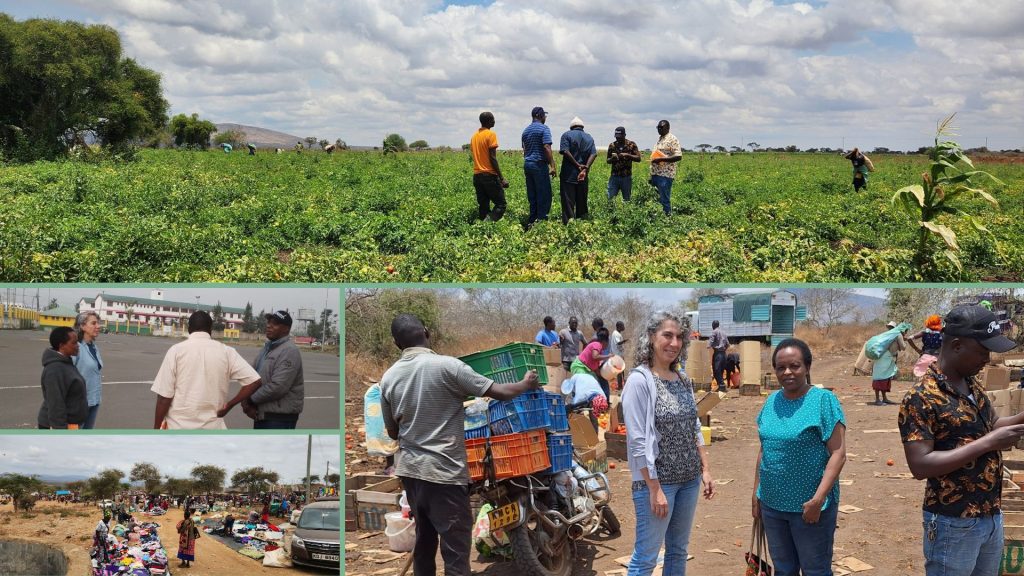
El proyecto INCATA continúa avanzando en su investigación sobre cadenas de valor hortícolas y acuícolas, con visitas de campo recientes a India y Kenia que han generado valiosos conocimientos. Los socios del proyecto colaboraron en actividades de reconocimiento rápido en ambos países.
INCATA Team Conducts Value Chain Studies in India and Kenya
The INCATA project continues to make significant progress in its horticultural and aquaculture value chain research, with recent field visits to India and Kenya yielding valuable insights. Project partners collaborated in rapid reconnaissance activities across both countries.
Taller inaugural del proyecto INCATA: Transformando la agricultura en África y Asia
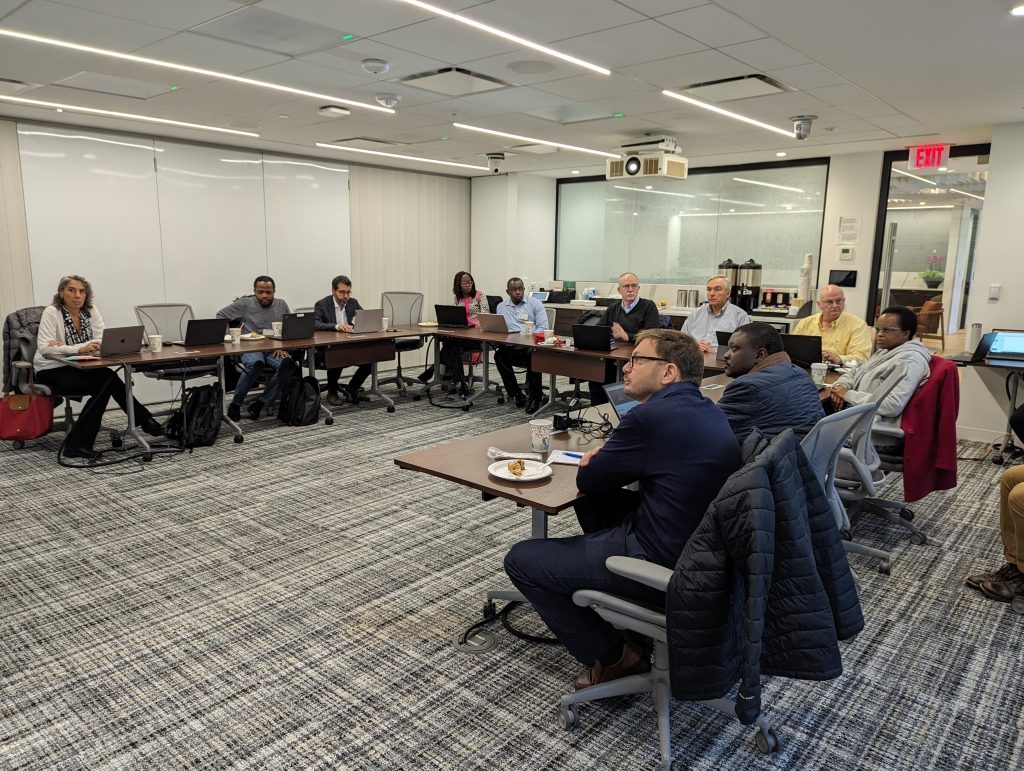
El proyecto INCATA: Linked Farms and Enterprises for Inclusive Agricultural Transformation in Africa and Asia la reunión se realizó del 1 al 5 de abril en las oficinas de la Fundación Bill & Melinda Gates en Washington DC, Estados Unidos.
Inception Workshop for Project INCATA: Transforming Agriculture in Africa and Asia
The Project INCATA: Linked Farms and Enterprises for Inclusive Agricultural Transformation in Africa and Asia kicked off with its Inception Workshop held from April 1st to April 5th at the offices of the Bill & Melinda Gates Foundation in Washington DC, USA.