The city of Cusco was the setting for the launch of "Indigenous Food Culture: Territory, Tradition and Transformation of Food...
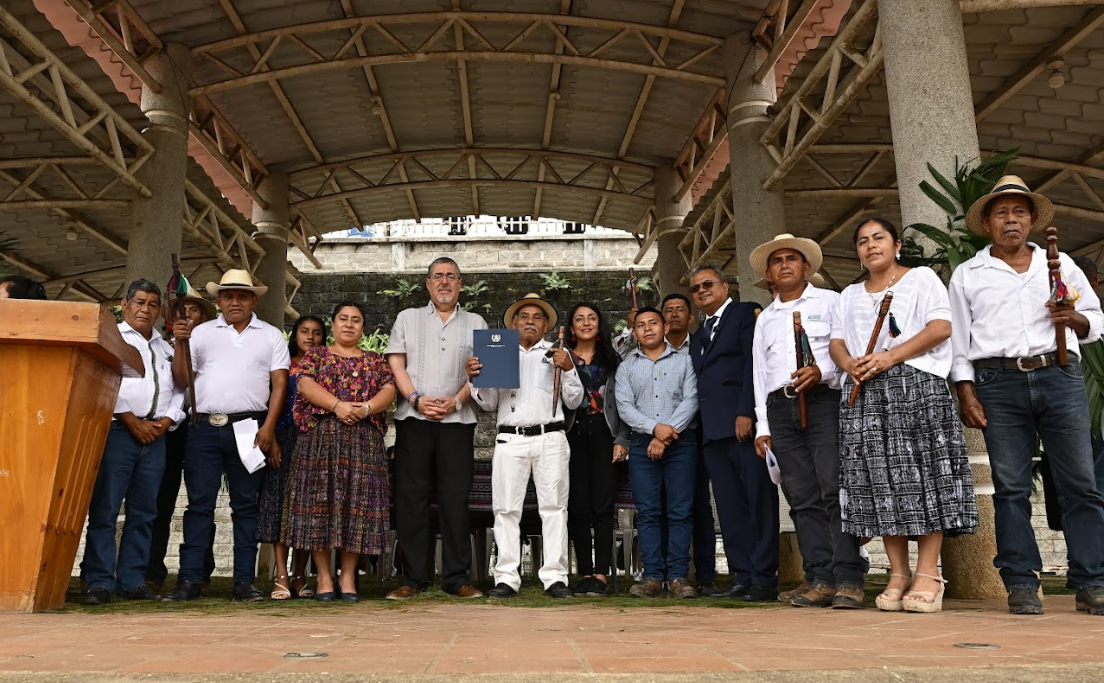
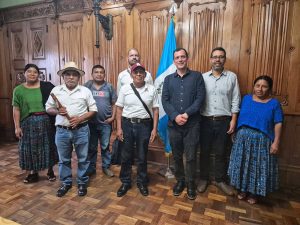
Last Tuesday, the President of Guatemala, Bernardo Arévalo, sealed a historic territorial development agenda with the ancestral authorities of Alta Verapaz. This agreement seeks to settle a historical debt with the Q’eqchi’ peoples, prioritizing participation and recognition of the ancestral governance of the territory.
For Rimisp – Latin American Center for Rural Development, this milestone is significant because it is the continuation of a series of dialogues that took place between the Q’eqchi’ indigenous communities and different spaces of the public sector, from municipalities and ministries to the highest executive power. And this dialogue has culminated in an agenda at territorial level.
IIn these dialogues, Rimisp has participated in recent years by supporting the Q’eqchi’ communities, systematizing information, participating in meetings and contributing with accumulated knowledge in the development of transformation processes at territorial level. Some projects linked to the process are the “Territories in Dialogue” initiative and the “Networks for Agri-food Transformation” project, both supported by IDRC of Canada.
In these projects, one of the basic objectives was to seek to build bridges between ancestral knowledge and public policy, and this was advanced in a number of different spaces for dialogue. One of these, in which Rimisp participated, was when representatives of the Maya Q’eqchi’ communities of Alta Verapaz established a series of high-level advocacy days in Guatemala City (see note). This milestone included a historic visit to the National Palace – the first by these ancestral authorities – to meet with the Private Secretariat of the Presidency, as well as technical working groups with the Secretariat of Food and Nutritional Security (SESAN) and the Ministry of Agriculture, Livestock and Food (MAGA).
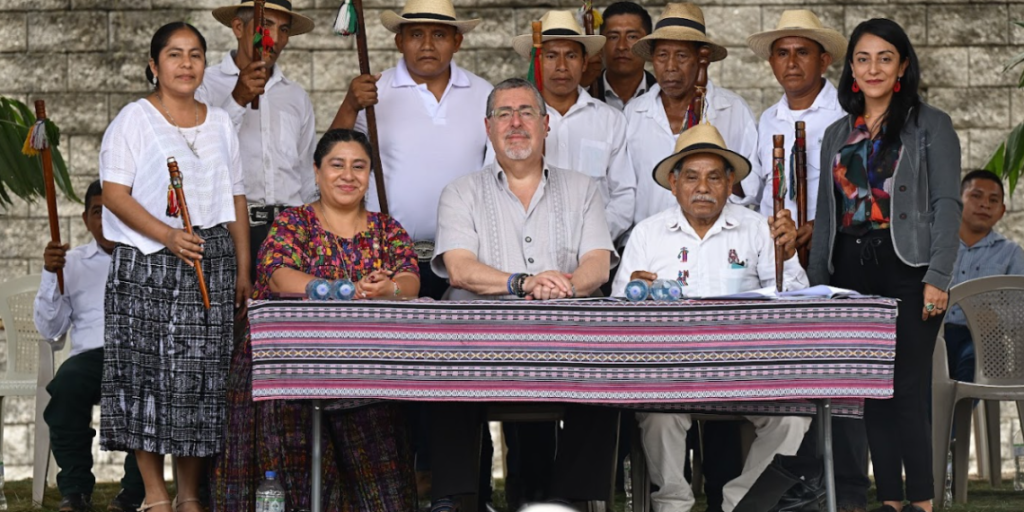
THE VISION FROM THE TERRITORY: A LONG TERM COMMITMENT
Rodrigo Yáñez Rojas, Director of Rimisp, brings to this milestone a vision forged directly with the communities. His link with Alta Verapaz is deep: he has visited with other researchers the territory on several occasions, listening to its leaders.
From this experience, Yáñez emphasizes that the struggle of these peoples transcends the pure economic to touch the fibers of identity: “In Alta Verapaz, planting is not only a productive activity, it is an act of resistance and belonging. Planting is thought of as being and remaining in the territory. For this reason, the agenda includes classic issues such as infrastructure needs, but also agricultural needs on the part of the communities, land protection and dialogue with local authorities.”
For Rimisp’s Director, the success of the agreement signed by President Arévalo lies in the State’s recognition that development connects with local wills and is not an external imposition: “The success of any territorial agenda depends on understanding that development paths can be built at different levels. Central policies must be adapted to territorial contexts. And as such, in this case, it implies involving issues such as food practices and respect for ancestral authorities. By considering local history, policies have a better projection of sustainability.” .
TOWARDS A FAIR AGRI-FOOD TRANSFORMATION
This progress in Alta Verapaz is positioned as a benchmark experience for the region, demonstrating the viability of governance models that integrate the visions of indigenous peoples in territorial development planning.
Rimisp is committed to maintaining technical assistance and provide supporting evidence to ensure that this agreement translates into tangible transformations, promoting more equitable and resilient territories in Central America and the rest of the continent.
Communities in Bolivia and Ecuador receive the latest pre-releases of the book “Indigenous Food Culture”.
Since the end of October, Rimisp and its territorial partners have visited communities in Colombia, Mexico, Guatemala, Bolivia and Ecuador...
New pre-launches of the book “Indigenous Food Culture” are held in Mexico and Guatemala
The publication edited by Rimisp continued its route through Latin America with meetings in the Sierra Norte de Puebla and...
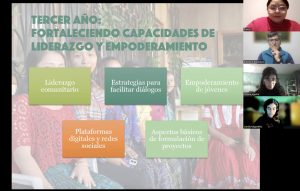
Rimisp concludes cycle of workshops with indigenous youth from Mexico, Guatemala and Bolivia
About 15 young people participated in the third and last cycle of virtual workshops that took place between May 7...
Guatemala: Building bridges between ancestral knowledge and public policies
Rimisp researchers, together with Sank’s local partners and Mayan Q’eqchi’ communities in the department of Alta Verapaz (Guatemala), carried out...

Between the desire to act and the reality of achieving the objective: indigenous rural youth and agroecology
New Rimisp paper explores the tensions limiting the adoption of agroecology by rural indigenous youth in Mexico, Guatemala and Bolivia.