About the project – INCATA
Facebook Instagram Twitter Youtube Linkedin About the project What is INCATA? INCATA is an innovative project funded by the Gates Foundation designed to study the relationship between commercial small-scale producers (cSPP) and micro, medium and small enterprises (MSME) in the hidden middle of agrifood value chains, to explain how it underpins and contributes to an […]
INCATA: Linked Farms and Enterprises for Inclusive Agricultural Transformation in Africa and Asia
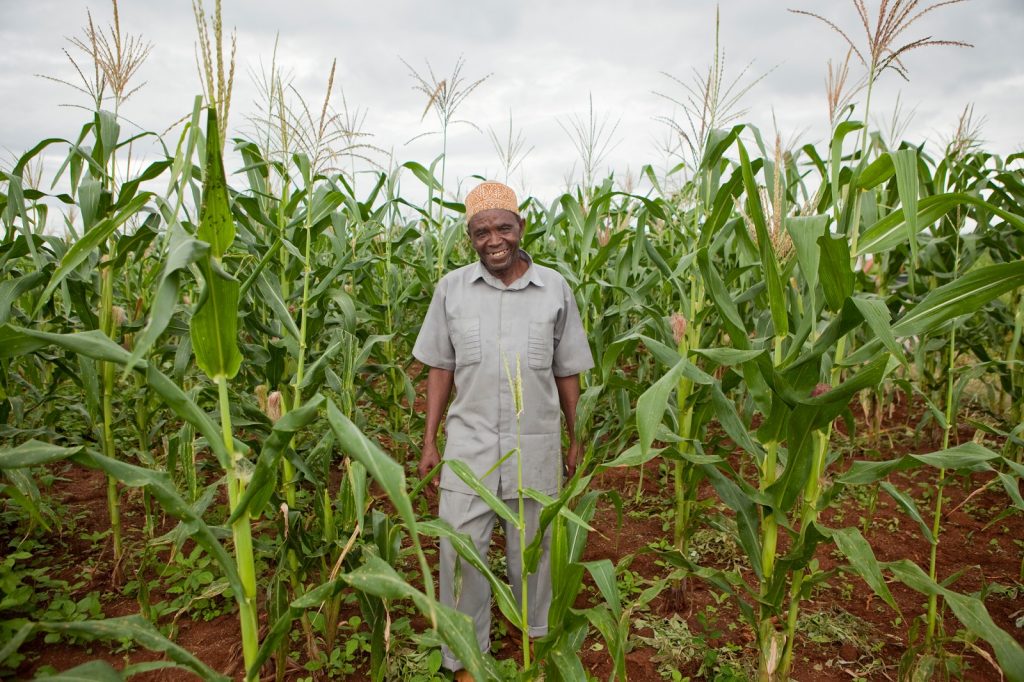
INCATA is an innovative project designed to study the relationship between cSPP and MSME in the hidden middle of agrifood value chains, to explain how it underpins and contributes to an inclusive agricultural transformation.
Complementing cash with productive inputs to improve food security and resilience among the extreme poor in Mali
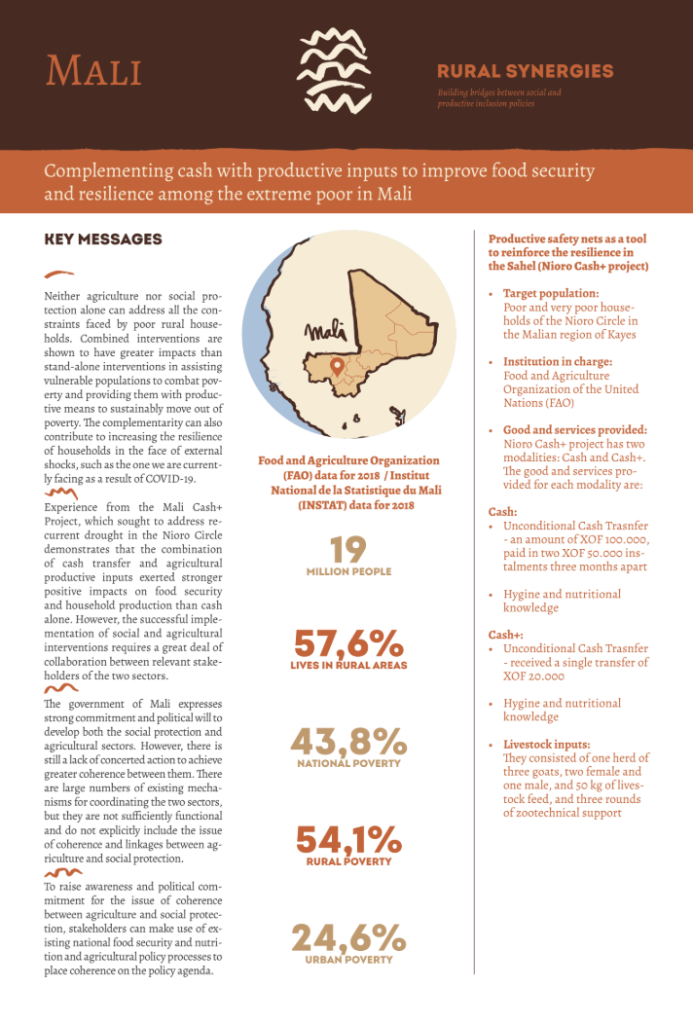
This policy brief, highlights the importance of combining social protection and agricultural interventions.
Mali: Building bridges between social and productive inclusion policies
In 2015-2017, fao’s resilience, emergency and rehabilitation office for west africa implemented the project productive safety nets as a tool to reinforce the resilience in the sahel (hereinafter referred to as the cash+ project) in mali and mauritania. The project’s primary objective was to offer a response to the critical humanitarian situation in many parts of the sahel, where around four and a half million people face recurrent food and nutrition crises. At the time of the project, this situation was caused by the late start of the rainy season, meagre crop harvests, armed conflict, low pastoral production and the residual effects of the ebola outbreak. In mali, the intervention was carried out in the nioro du sahel circle, in the region of kayes. It originated from the ongoing quest by the malian authorities for greater food and nutrition security for the population, in a country that often suffers food shortages. The 2015 early hunger period could have exacerbated the deteriorating livelihoods of very poor households if no measures had been taken. There was clearly an urgent need to help vulnerable populations better absorb and withstand shocks by responding to early warning signals.