Proyecto INCATA: Evidencia y conocimiento sobre el rol del “medio oculto” en la transformación agrícola
La iniciativa ha finalizado sus actividades en África y Odisha (India), centrando su etapa de cierre en la transferencia de la evidencia técnica generada durante su ejecución.
Transformación inclusiva de las cadenas de valor hortícolas: evidencia comparada de África y Asia
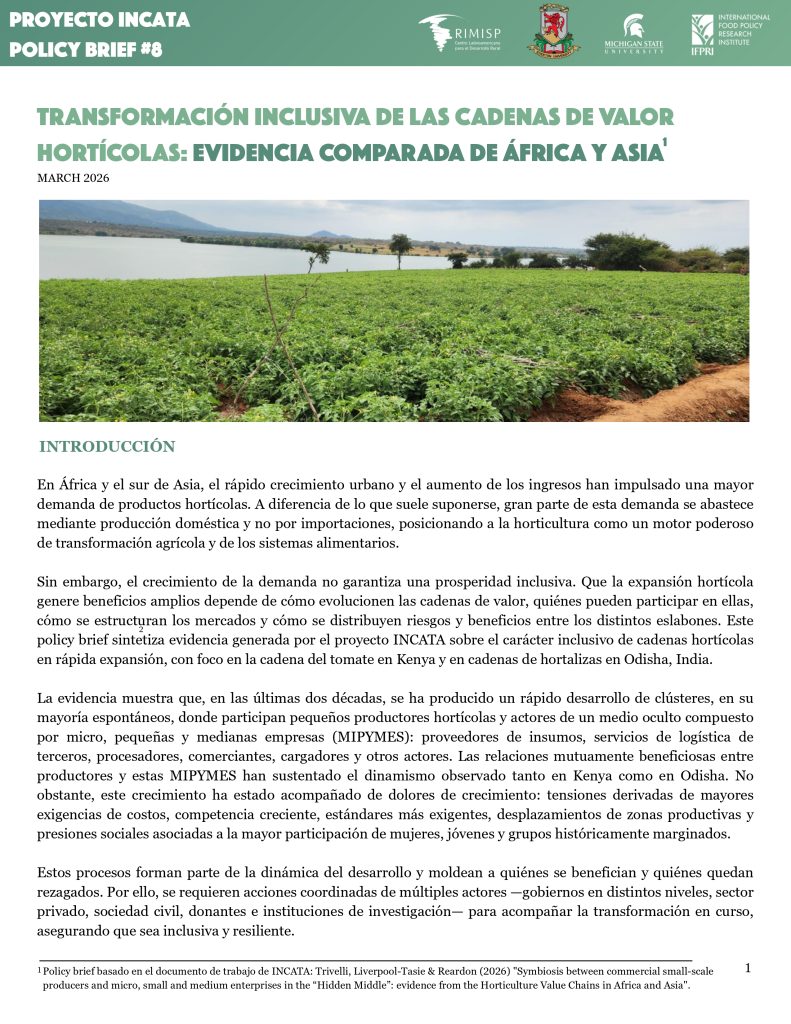
En África y el sur de Asia, el rápido crecimiento urbano y el aumento de los ingresos han impulsado una mayor demanda de productos hortícolas. A diferencia de lo que suele suponerse, gran parte de esta demanda se abastece mediante producción doméstica y no por importaciones, posicionando a la horticultura como un motor poderoso de transformación agrícola y de los sistemas alimentarios.
Inclusive Transformation of Horticultural Value Chains: Comparative Evidence from Africa and Asia
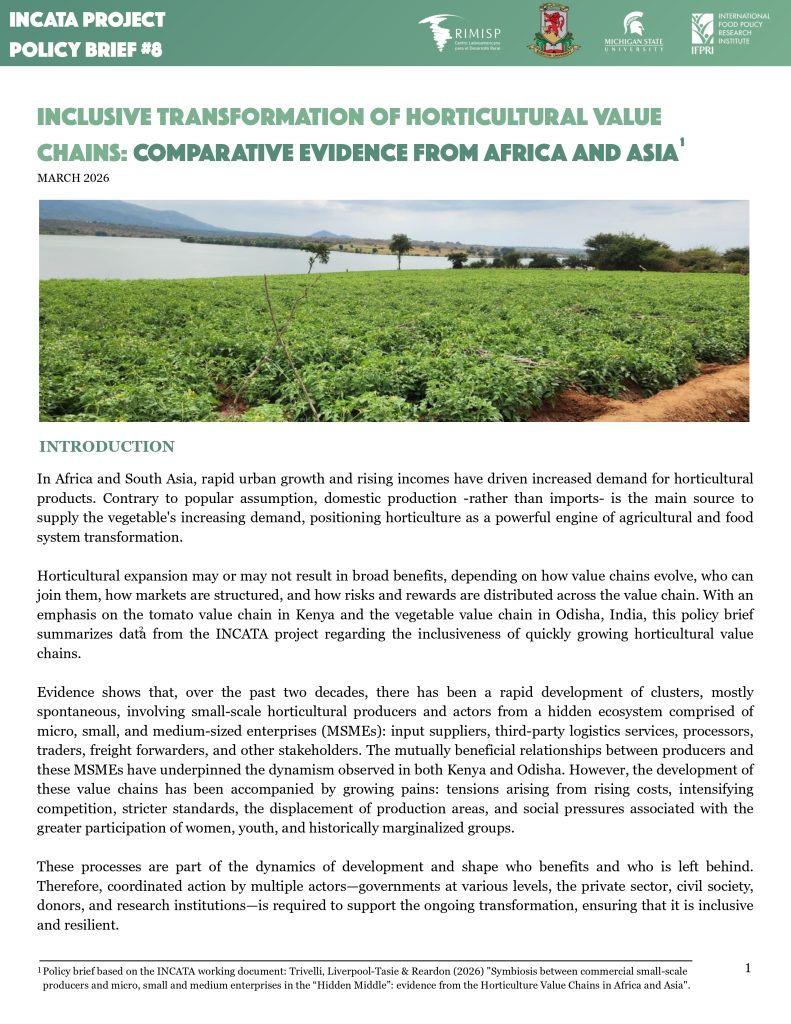
In Africa and South Asia, rapid urban growth and rising incomes have driven increased demand for horticultural products. Contrary to popular assumption, domestic production -rather than imports- is the main source to supply the vegetable’s increasing demand, positioning horticulture as a powerful engine of agricultural and food system transformation.
Symbiosis Between Commercial Small-Scale Producers and Micro, Small and Medium Enterprises in the “Hidden Middle”: Evidence from the Horticulture Value Chains in Africa and Asia
Rapid urbanization and changing diets in Africa and South Asia are raising demand for horticultural products, creating opportunities for agrifood transformation. This report synthesizes evidence from the INCATA project (Linked Farms and Enterprises for Inclusive Agricultural Transformation in Africa and Asia). It finds that small-scale producers are highly commercial and often embedded in mutually beneficial relationships with micro, small, and medium enterprises (MSMEs) in the “hidden middle” of input supply, trading, logistics, and related services.
Commercial small scale vegetable producers and inclusive agricultural transformation in Odisha
This report compiles findings from a research project titled “Tracking commercial small-scale producers for inclusive agricultural transformation” (INCATA), that studied the relationships between commercial small-scale producers (farmers) and micro, small, and medium enterprises (MSMEs) in vegetable value chains in Odisha, India.
Does Commercial Small-Scale Aquaculture Drive Inclusive Agricultural Transformation in Odisha?
This report examines whether commercial small-scale aquaculture contributes to inclusive agricultural transformation in Odisha, India, using mixed methods evidence from market, farm, community, and geospatial surveys, and qualitative “rapid reconnaissance” interviews with 41 value chain actors.
Towards inclusive and sustainable vegetable value chains in Odisha
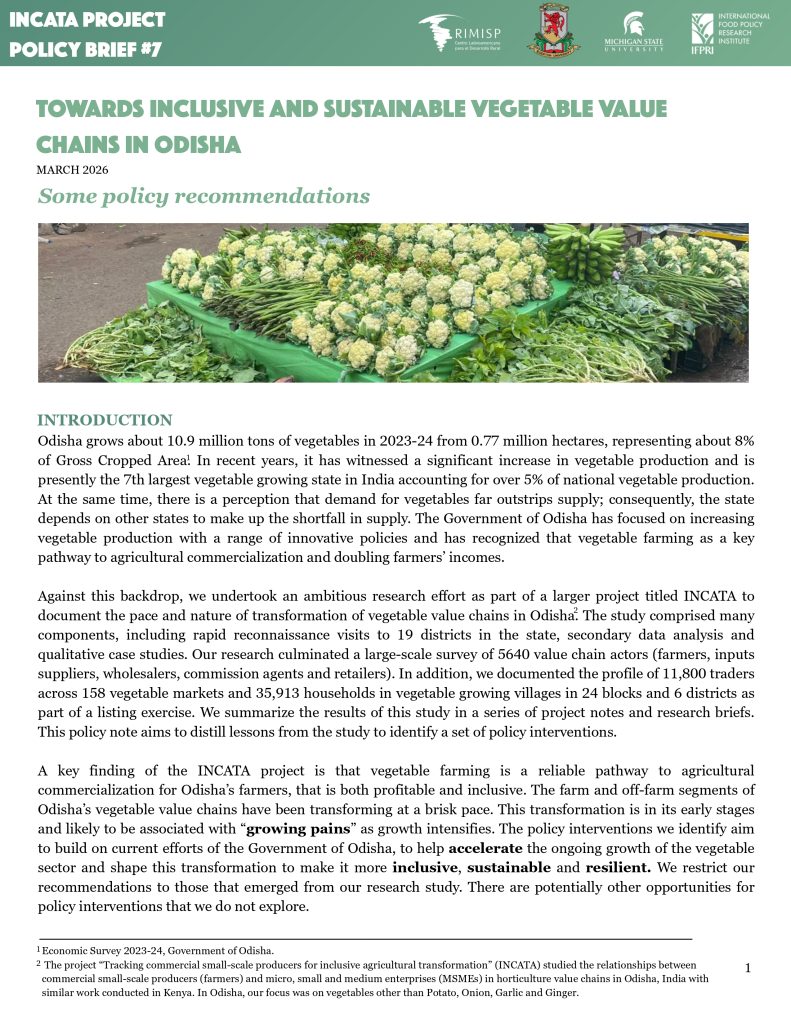
Odisha grows about 10.9 million tons of vegetables in 2023-24 from 0.77 million hectares, representing about 8% of Gross Cropped Area.
Rimisp y socios internacionales concluyen actividades del proyecto INCATA en Nairobi, Kenia
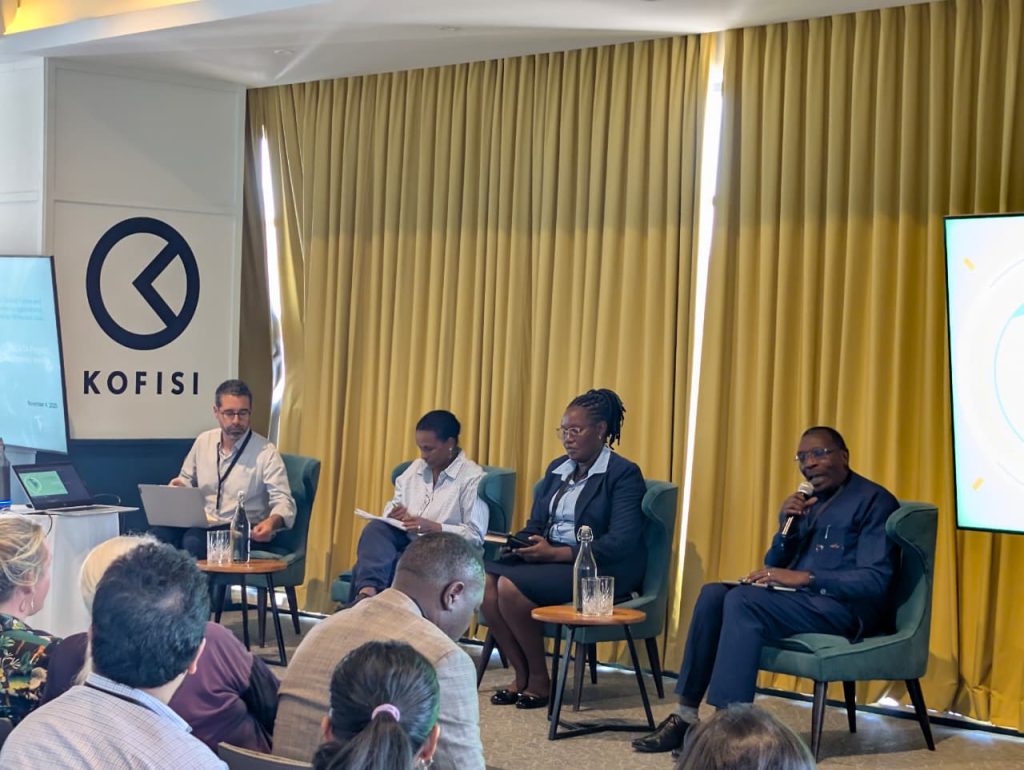
Rodrigo Yáñez y Andrés Fuica de Rimisp, junto a Carolina Trivelli del Instituto de Estudios Peruanos (IEP), participaron el pasado 4 de febrero, en Nairobi, Kenia, del evento público de cierre del proyecto INCATA.
El rol del “eslabón oculto” en los sistemas agroalimentarios marcó el debate del Seminario Internacional del proyecto INCATA
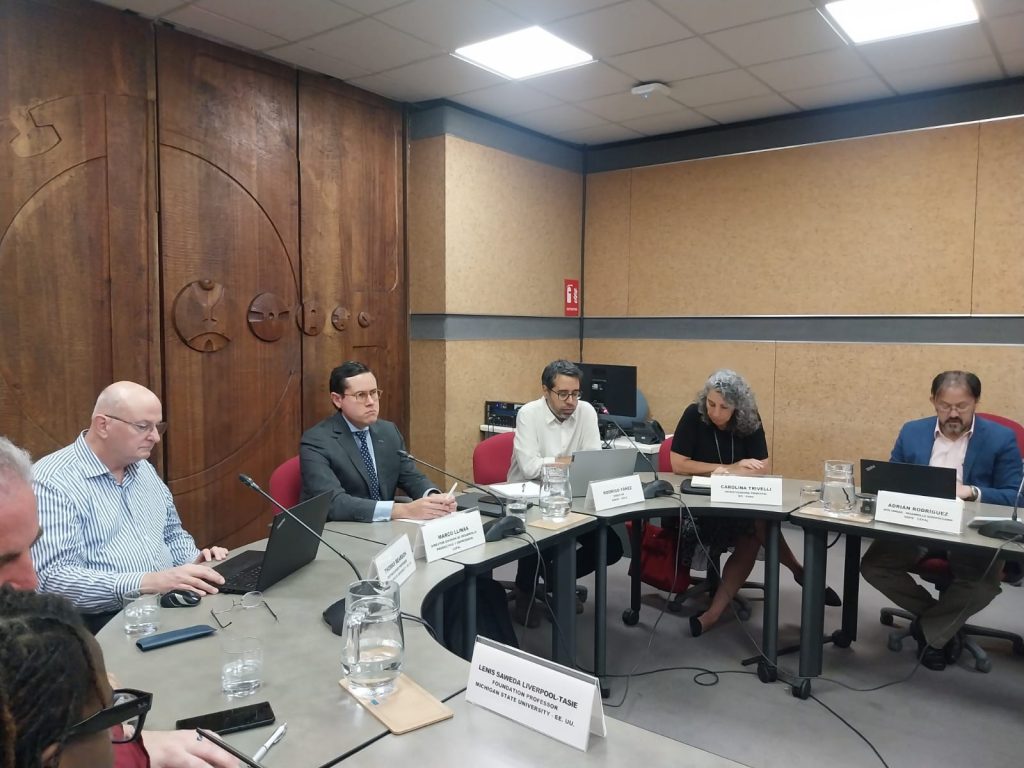
En el marco del proyecto INCATA, expertos internacionales se reunieron para debatir cómo la articulación entre pequeños productores y las MIPYMES agroalimentarias impulsa el desarrollo rural en África, Asia y América Latina.
The hidden middle of agrifood systems: a systematic review of leading authors and policy recommendations
This report synthesizes the literature on the Hidden Middle of agrifood systems—the midstream segment that connects producers to markets through processing, logistics, and intermediation.