Unlocking the Hidden Middle: Reclaiming the Role of Intermediaries in Agrifood Systems
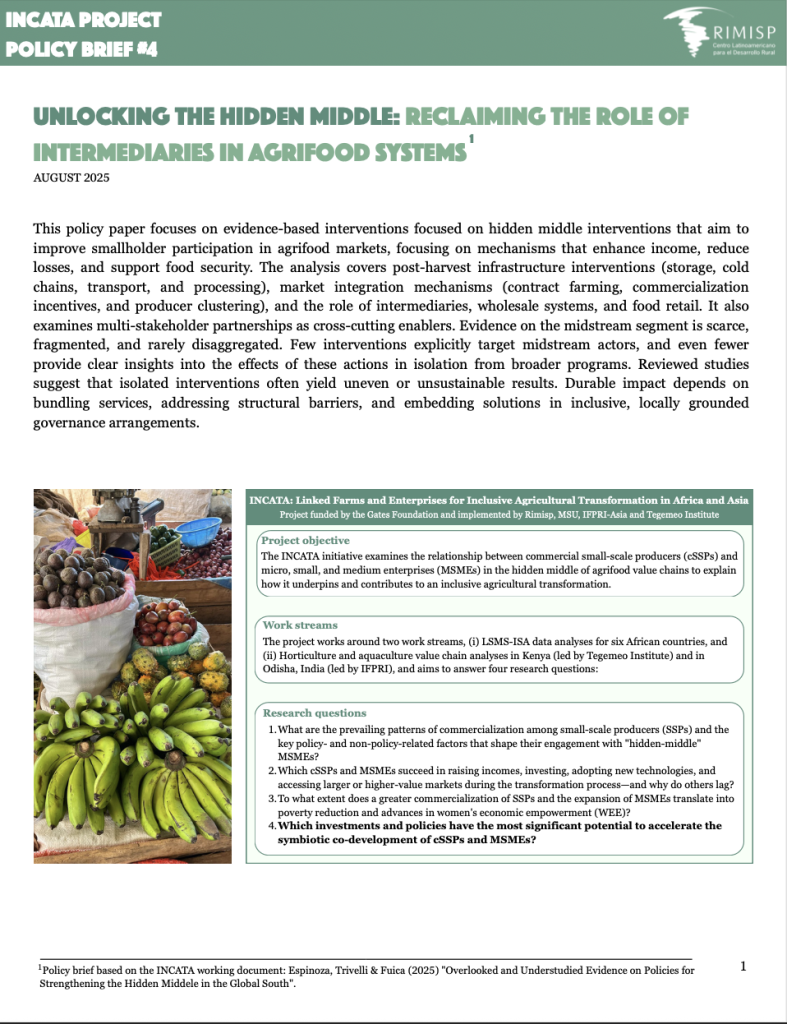
This policy paper focuses on evidence-based interventions focused on hidden middle interventions that aim to
improve smallholder participation in agrifood markets, focusing on mechanisms that enhance income, reduce
losses, and support food security. The analysis covers post-harvest infrastructure interventions (storage, cold
chains, transport, and processing), market integration mechanisms (contract farming, commercialization
incentives, and producer clustering), and the role of intermediaries, wholesale systems, and food retail. It also
examines multi-stakeholder partnerships as cross-cutting enablers. Evidence on the midstream segment is scarce,
fragmented, and rarely disaggregated. Few interventions explicitly target midstream actors, and even fewer
provide clear insights into the effects of these actions in isolation from broader programs. Reviewed studies
suggest that isolated interventions often yield uneven or unsustainable results. Durable impact depends on
bundling services, addressing structural barriers, and embedding solutions in inclusive, locally grounded
governance arrangements.
Enabling Infrastructure for Inclusive Agrifood Systems: Evidence and Implications from the Global South
This policy paper focuses on the evidence on which policies and investments aimed at supplying public goods that support the entire agrifood system-from production to consumption-and are key for inclusive agricultural transformation.
Strengthening Producers for Agrifood Transformation: Evidence on Inputs, Irrigation, Organizations, and Innovation
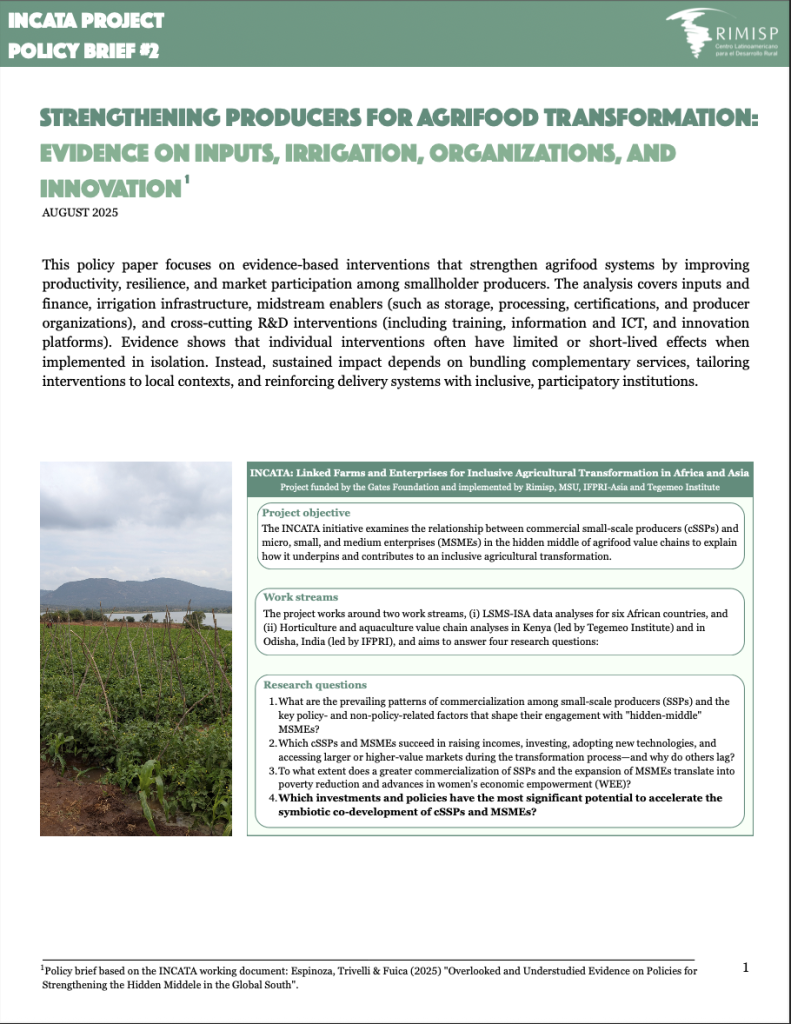
This policy paper focuses on evidence-based interventions that strengthen agrifood systems by improving
productivity, resilience, and market participation among smallholder producers. The analysis covers inputs and
finance, irrigation infrastructure, midstream enablers (such as storage, processing, certifications, and producer
organizations), and cross-cutting R&D interventions (including training, information and ICT, and innovation
platforms). Evidence shows that individual interventions often have limited or short-lived effects when
implemented in isolation. Instead, sustained impact depends on bundling complementary services, tailoring
interventions to local contexts, and reinforcing delivery systems with inclusive, participatory institutions.
Synthesis and Lessons Learned: Networks for Agri-Food Transformation Project
This document presents the main lessons learned from the project implemented
in three indigenous territories in Latin America
together with three partner organizations: CESDER-PRODES in Sierra Norte de Puebla, Mexico; APROBA-SANK in Alta Verapaz, Guatemala; and PROSUCO in the municipality of Torotoro, Bolivia.
The three initiatives were developed in territories characterized by a high proportion of indigenous population, being mostly rural, facing unfavorable socioeconomic conditions compared to the respective national averages and the presence of socio-environmental conflicts related to land and water, and experiencing migratory dynamics associated with livelihoods.
Missing Links: Addressing the Research Gap on the Hidden Middle in Agrifood Systems
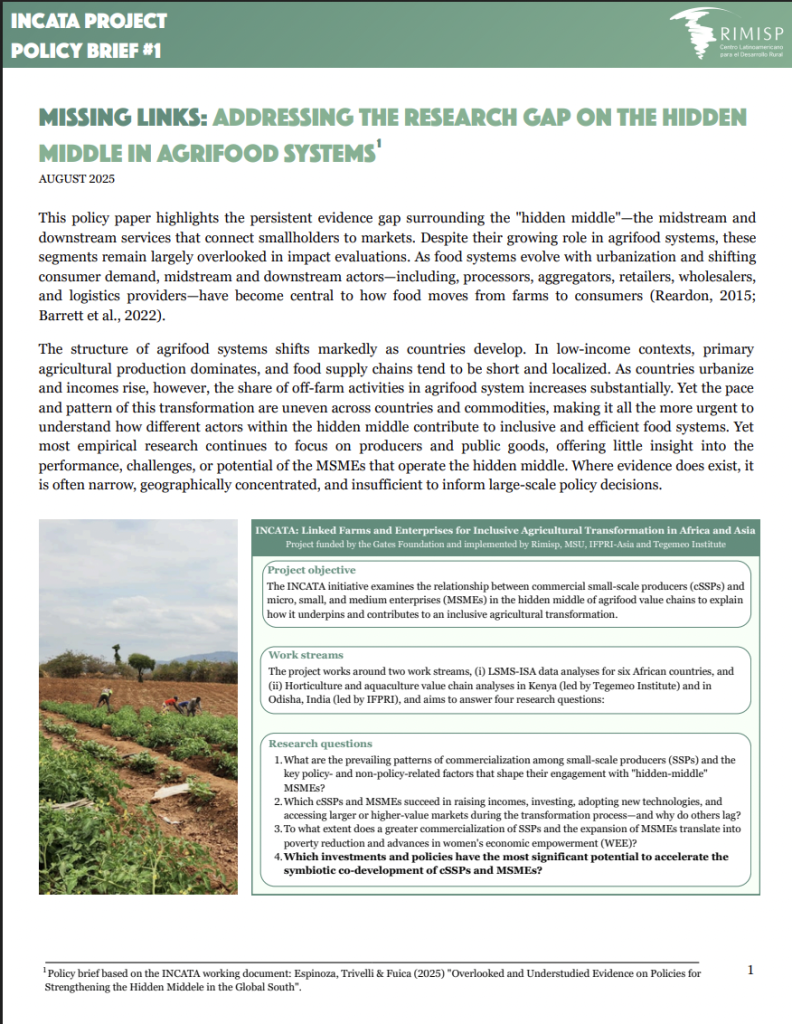
This policy paper highlights the persistent evidence gap surrounding the “hidden middle”—the midstream and
downstream services that connect smallholders to markets. Despite their growing role in agrifood systems, these
segments remain largely overlooked in impact evaluations. As food systems evolve with urbanization and shifting
consumer demand, midstream and downstream actors—including, processors, aggregators, retailers, wholesalers,
and logistics providers—have become central to how food moves from farms to consumers (Reardon, 2015;
Barrett et al., 2022).
Incentives for diversified agriculture as a strategy for overcoming poverty in rural contexts
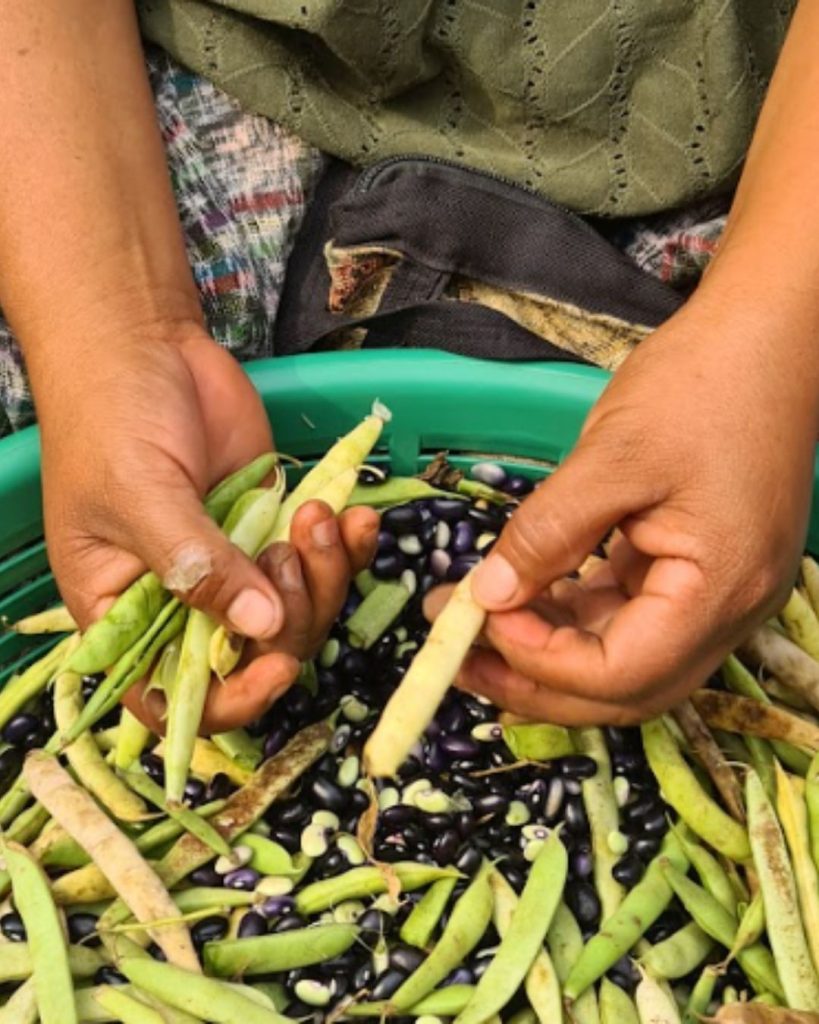
Since 2021, Rimisp has accompanied the indigenous civil association APROBA SANK, who have been working with Mayan Q’eqchi’ communities and authorities for over 20 years in Alta Verapaz, Guatemala. SANK, in its mission to improve living conditions and achieve greater autonomy for local communities, has proposed the establishment of an Incentive Program for Diversified Peasant Production (PIN-Campesino).
Fostering the participation of indigenous families and communities in agroecological transitions: Experiences from three territories in Bolivia, Guatemala and Mexico
Agroecology distinguishes itself from other approaches to sustainable agriculture by focusing on the protagonism of family farmers and peasant and indigenous grassroots organizations in the processes of food systems transformation. This study explores various strategies to promote the participation of these communities in agroecological transitions in indigenous territories in Mexico, Guatemala and Bolivia.
Indigenous agro-food systems in transition: Experiences from three territories in Bolivia, Guatemala and Mexico

This study explores the dynamics of indigenous agri-food systems in transition in three Latin American territories: Sierra Norte de Puebla (Mexico), Alta Verapaz (Guatemala), and Torotoro (Bolivia). Through surveys of 569 indigenous farmers, it examines how local communities respond to the pressures of climate change, socioeconomic vulnerability, and market integration. The results reveal high levels of pluriactivity, self-production of food for household consumption, and significant dependence on local markets, along with increasing environmental risks such as drought and soil degradation. In the context of adverse conditions, households maintain agroecological practices such as crop diversification and the conservation of native seeds, while using conventional agricultural inputs to maintain productivity. The findings illustrate that indigenous agri-food systems are not static but rather adopt hybrid strategies that combine tradition and modernity to ensure livelihoods and food security in increasingly uncertain contexts.
The Four Indigenous Directions: Towards a Governance of Planet Earth in Balance

This document is based on Ken Paul’s presentation on sustainable governance of planet Earth and
the oceans for the meeting “Transformation of food systems: perspectives of indigenous peoples
and nations of the Americas” held in Yunguilla, Ecuador, with the participation of representatives
of indigenous peoples and nations of the Americas.
Indigenous Rights in Latin America: Main Tools and the Challenges of their Implementation

This document is based on Kelly Ulcuango’s presentation on indigenous rights for the meeting
“Transformation of food systems: perspectives of indigenous peoples and nations of the Americas”
held in Yunguilla, Ecuador, with the participation of representatives of indigenous peoples and
nations of the Americas.