Culture Alimentaire Autochtone
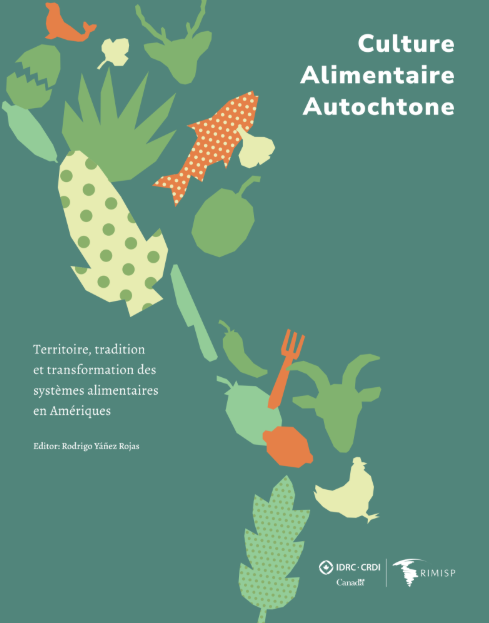
Cet ouvrage constitue l’expression ultime d’un échange d’expériences et de savoirs entre membres des peuples et nations asháninka, aymara, kayambi, cri, inuit, náhuatl, maya q’eqchi’, métis, misak et wolastoqey, qui traversent le continent américain du nord du Canada jusqu’en Amazonie.
Indigenous Food Culture
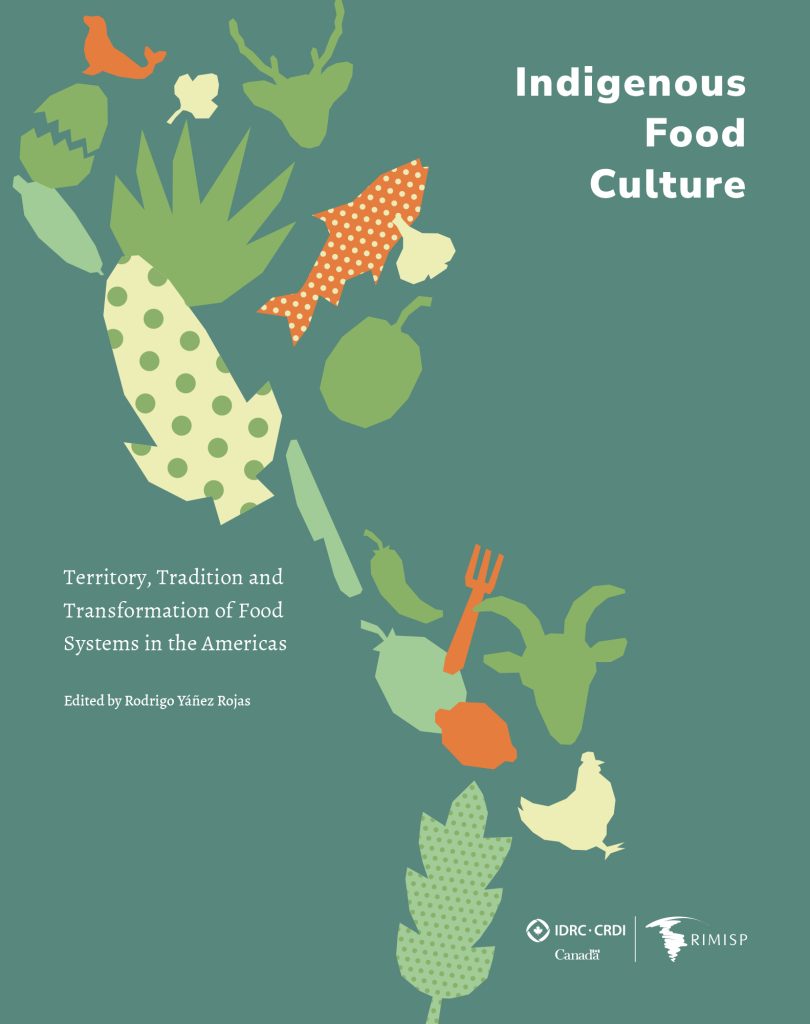
This book is the final expression of an exchange of experiences and knowledge among members of the Asháninka, Aymara, Kayambi, Cree, Inuit, Náhuatl, Maya Q’eqchi’, Métis, Misak, and Wolastoqey peoples and nations, spanning the American continent from northern Canada to the Amazon.
Libro Cultura Alimentaria Indígena: Territorio, tradición y transformación de los sistemas alimentarios en las Américas
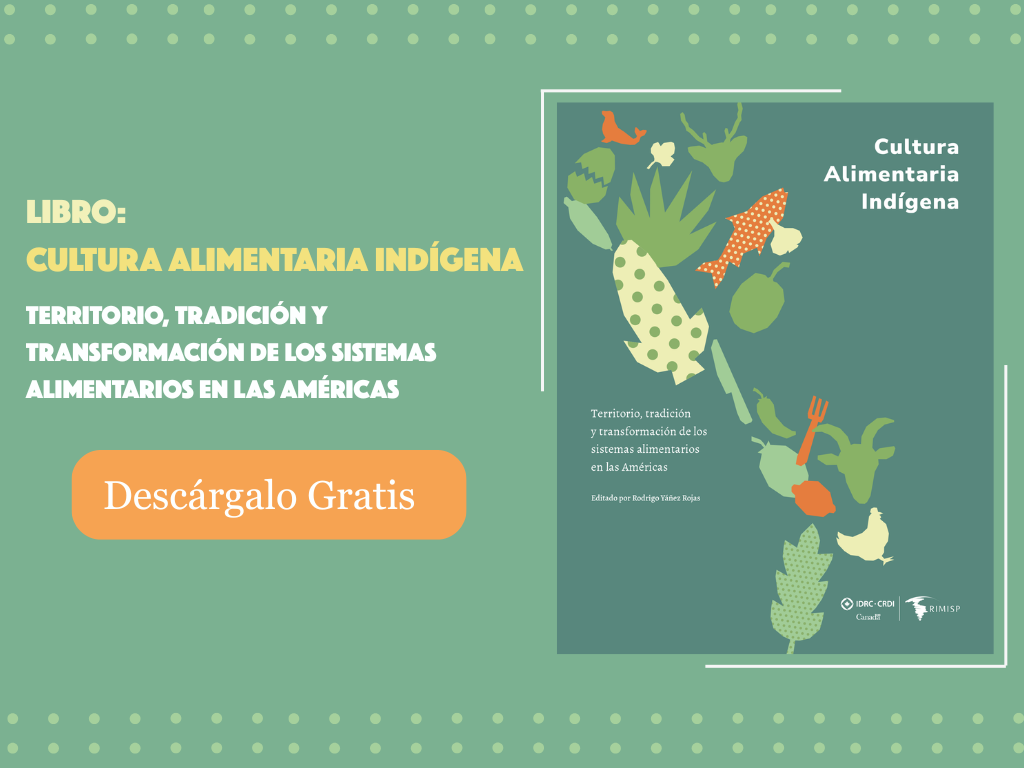
Este libro es un viaje por los territorios, culturas y sistemas alimentarios de los pueblos indígenas de las Américas, desde la Amazonía hasta Canadá.
Cultura Alimentaria Indígena
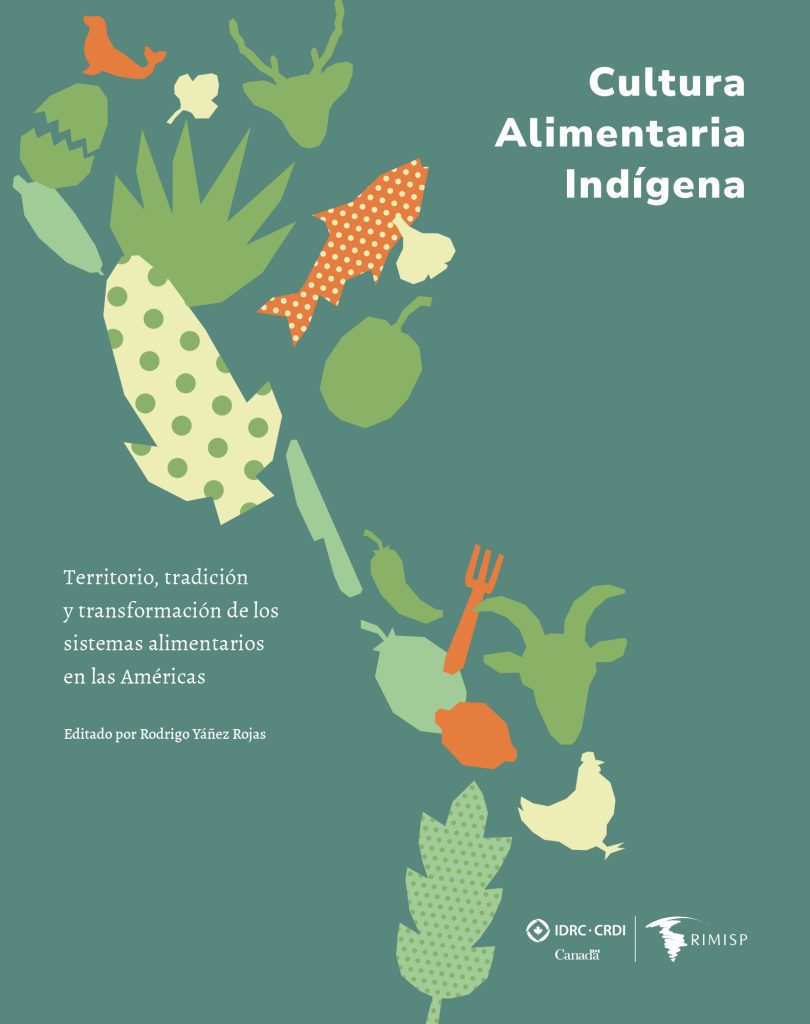
Este libro es la expresión final de un intercambio de experiencias y saberes entre miembros de los pueblos y naciones asháninka, aymara, kayambi, cree, inuit, náhuatl, maya q’eqchi’, métis, misak y wolastoquey, que atraviesan el continente americano desde el norte de Canadá hasta la Amazonía.
The hidden middle of agrifood systems: a systematic review of leading authors and policy recommendations
This report synthesizes the literature on the Hidden Middle of agrifood systems—the midstream segment that connects producers to markets through processing, logistics, and intermediation.
Evidence Review: Investments and Policies in Agrifood Chain Linkages
Agrifood systems are increasingly shaped by activities beyond the farm gate, yet the midstream and
downstream segments—known as the hidden middle—remain severely under-researched. This paper
presents a review of 276 impact evaluations and systematic reviews to assess what is currently known
about effective policies and programs targeting the hidden middle in low- and middle-income
countries. While 52% of the studies focus on smallholder-oriented interventions and 21% on public
goods, only 27% address the hidden middle, and nearly half of these concern contract farming—a
mechanism designed to bypass intermediaries rather than strengthen them. Most intervention
categories in the midstream and downstream are supported by fewer than four rigorous studies.
Moreover, services like storage, training, and market information are evaluated almost exclusively in
the context of producers, ignoring the micro, small, and medium enterprises (MSMEs) that dominate
the hidden middle. The paper concludes that addressing this evidence gap is essential to designing
inclusive, resilient agrifood systems and calls for a shift in research and policy focus toward the actors
and services that connect farms to markets and consumers.
Fortalecimiento del Eslabón Oculto: Lecciones de política derivadas de la investigación global sobre la transformación del segmento intermedio
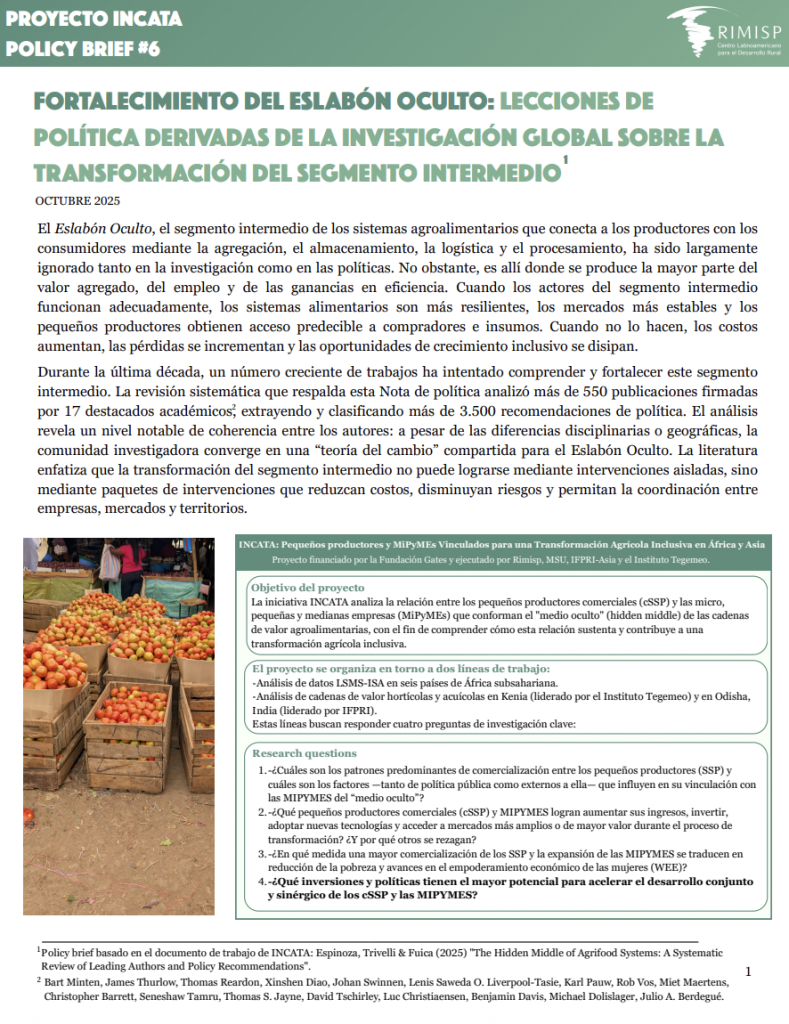
El Eslabón Oculto, el segmento intermedio de los sistemas agroalimentarios que conecta a los productores con los
consumidores mediante la agregación, el almacenamiento, la logística y el procesamiento, ha sido largamente
ignorado tanto en la investigación como en las políticas. No obstante, es allí donde se produce la mayor parte del
valor agregado, del empleo y de las ganancias en eficiencia. Cuando los actores del segmento intermedio
funcionan adecuadamente, los sistemas alimentarios son más resilientes, los mercados más estables y los
pequeños productores obtienen acceso predecible a compradores e insumos. Cuando no lo hacen, los costos
aumentan, las pérdidas se incrementan y las oportunidades de crecimiento inclusivo se disipan.
Strengthening the Hidden Middle: Policy Lessons from the Global Research on Midstream Transformation
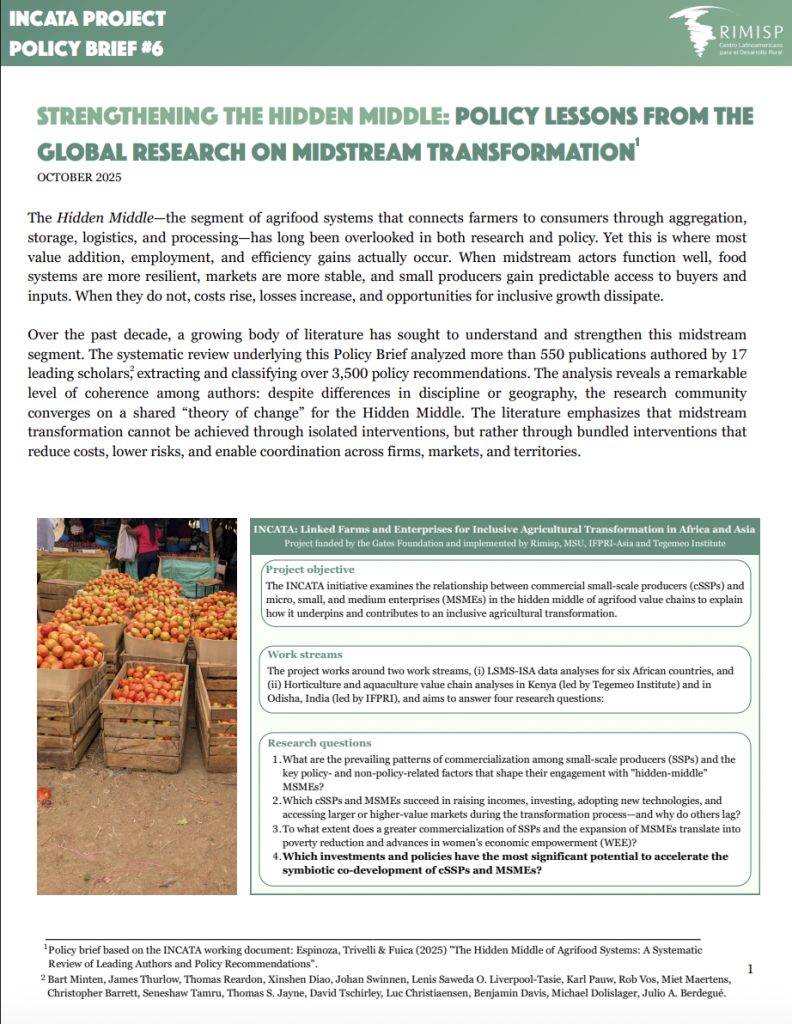
The Hidden Middle—the segment of agrifood systems that connects farmers to consumers through aggregation,
storage, logistics, and processing—has long been overlooked in both research and policy. Yet this is where most
value addition, employment, and efficiency gains actually occur. When midstream actors function well, food
systems are more resilient, markets are more stable, and small producers gain predictable access to buyers and
inputs. When they do not, costs rise, losses increase, and opportunities for inclusive growth dissipate.
Fortalecimiento del Medio Oculto: Acción Institucional, Efectividad y Próximos Pasos
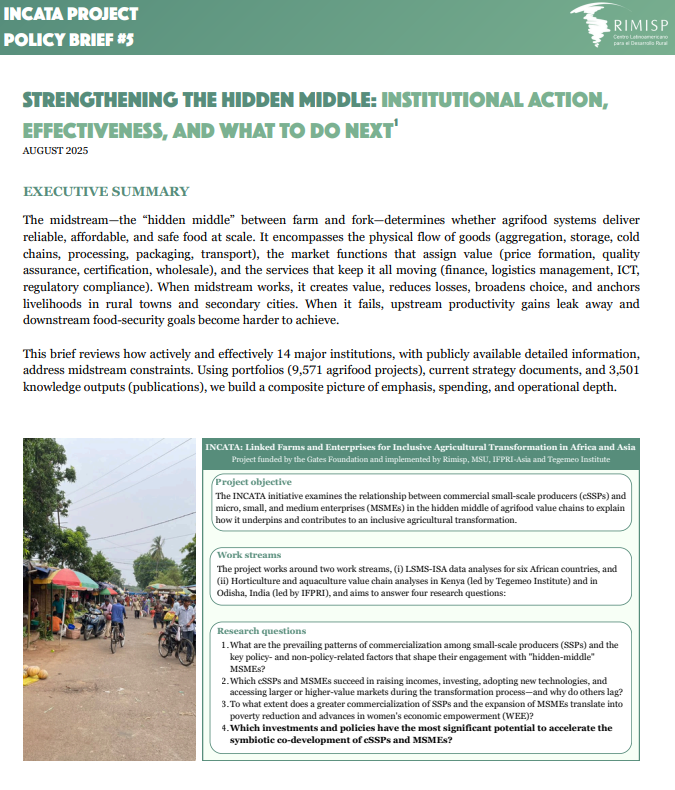
El segmento intermedio—el “medio oculto” entre la producción agrícola y el consumidor final—determina si los
sistemas agroalimentarios ofrecen alimentos confiables, asequibles y seguros a gran escala. Este abarca el flujo
físico de bienes (agrupación, almacenamiento, cadenas de frío, procesamiento, empaque, transporte), las
funciones de mercado que asignan valor (formación de precios, aseguramiento de la calidad, certificación,
comercialización al por mayor) y los servicios que mantienen todo en funcionamiento (financiamiento, gestión
logística, TIC, cumplimiento normativo). Cuando el segmento intermedio funciona, crea valor, reduce pérdidas,
amplía la variedad de opciones y sostiene los medios de vida en pueblos rurales y ciudades secundarias. Cuando
falla, las ganancias de productividad en la etapa inicial se diluyen y los objetivos de seguridad alimentaria en la
etapa final se vuelven más difíciles de alcanzar.
Este informe analiza cuán activamente y con qué efectividad 14 instituciones principales, con información
detallada disponible públicamente, abordan las limitaciones del segmento intermedio. Utilizando portafolios
(9,571 proyectos agroalimentarios), documentos estratégicos actuales y 3,501 productos de conocimiento
(publicaciones), construimos un panorama compuesto de énfasis, gasto y profundidad operativa.
Strengthening the Hidden Middle: Institutional Action, Effectiveness, and What to Do Next
The midstream—the “hidden middle” between farm and fork—determines whether agrifood systems deliver
reliable, affordable, and safe food at scale. It encompasses the physical flow of goods (aggregation, storage, cold
chains, processing, packaging, transport), the market functions that assign value (price formation, quality
assurance, certification, wholesale), and the services that keep it all moving (finance, logistics management, ICT,
regulatory compliance). When midstream works, it creates value, reduces losses, broadens choice, and anchors
livelihoods in rural towns and secondary cities. When it fails, upstream productivity gains leak away and
downstream food-security goals become harder to achieve.
This brief reviews how actively and effectively 14 major institutions, with publicly available detailed information,
address midstream constraints. Using portfolios (9,571 agrifood projects), current strategy documents, and 3,501
knowledge outputs (publications), we build a composite picture of emphasis, spending, and operational depth.